
High Hopes for 2026 Fall Auctions of Collectible Watches

Exceptional results with diverse new records spark the expectation of a new era to dawn on collectible watches. Just four Daytonas achieved combined sales of over € 40 m during a charity sale in London on September 26th. Will watches soon be elevated into the same league as art?
Key Market Drivers Spring 2026
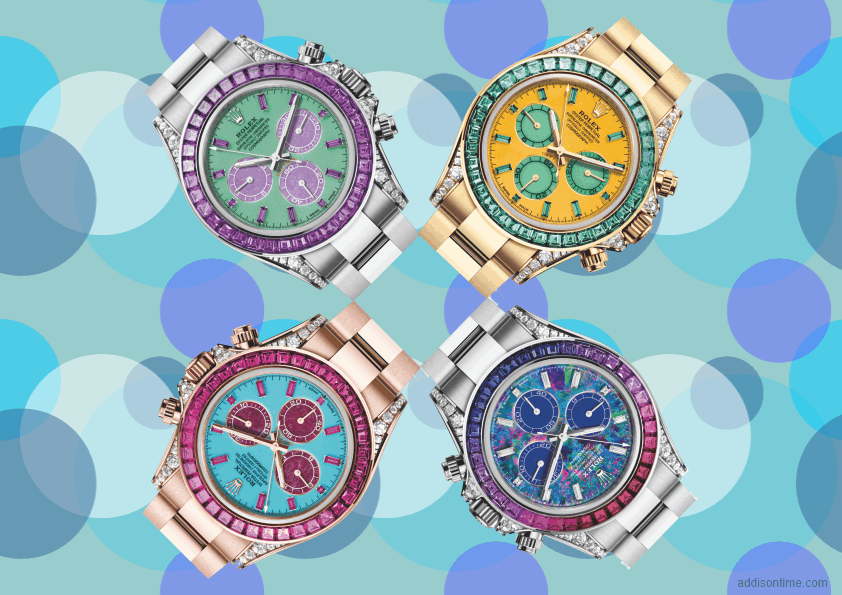
As usual, it makes sense to look behind the numbers. For a large part, the tremendous growth of the first six months was driven by the watches of Franҫois-Paul Journe. They only address a narrow audience, as the average auction price of Journe watches was at € 250 k this spring. The sale of the ‘Quattro Stagioni Daytonas’ was an unprecedented charity move by Rolex and the opportunity for affluent bidders to possess officially unique pieces in a very luxurious design. Still, not least the strong growth of Cartiers and Vintage High Jewelry watches of late indicate strength in the market. (https://www.monacolegendauctions.com/)

Monaco Legend Group (MLG) Catalogue Picks
MLG’s auction will open the season on Oct 31st -Nov 1st. At first glance, their catalogue does not appear as spectacular. This might be due to the important timepieces that came to market over the past 12 months, like 2 of only 4 known Patek Philippes 1518 in stainless steel or 1 of only 2 known Rolexes 6062 with black lacquer dial and diamond hour markers. This time too, they have a Rolex 6062, however in a more common configuration. The second cover girl is an early, super rare and important Audemars Piguet calendar watch with phases of the moon that needs some explanation to be fully appreciated (further below).

More Top Lots in the Catalogue
Further examination of the catalogue reveals more high end pieces in the sale. There is a Patek Philippe 2499/100, the last series of the legendary Chronograph with perpetual calendar still built on the mechanics of Valjoux and Victorin Piguet (tot 234). There are also exciting Patek Philippe Nautilus Lots. Early Nautilus watches always come in steel, or yellow gold except some 20 that were made of white gold. Lot 40 is one of these and it come with its original Gay Frères bracelet. Those who prefer the modern 5711 find a steel Tiffany example in NOS condition in lot. There is also a valuable and large Vacheron Constantin time only watch with a 1950’s cloisonné dial in the sale. The execution of the map of the Americas on the dial resembles that of the Patek Philippe world time watch model 2523 that recently sold for CHF 5 m.

Many Cartiers
There are many Haute Jewelry watches and many Cartiers in the catalogue. MLG works closely with the famous collector and author Auro Mantanari who not only contributed the Rolex 6062 from the title but also some valuable Cartiers. Instagram personality Roni Madhvani (@roni_m_29) also delivered some interesting Cartiers into the sale. Vintage models from the 1960’s and 70’ are in high demand, especially when they carry English metal stamps. Rarely seen audacious designs that are still typical of the Brand do well too. Collecting Cartiers is similar to other makers in that originality and quality, especially when it comes to dials is key.

Certified Vintage Rolex
Rolex chronographs are kind of the base business for the vintage experts at MLG. The catalogue offers a curated selection from Daytonas to Pre-Daytonas and even Pre-Oysters. However, the anxiety seems to run deep as indicated by the recent success of certified vintage chronographs. Watches that were serviced by the Rolex ateliers in Geneva achieve premium prices. Interestingly there are pieces with a certificate by Pucci Papaleo in the sale too. He ows his fame to the publications ‘Cronografi Rolex’ and ‘Ultimate Daytona’ in the context of the legendary ‘Daytona Lesson One’ auction in 2013, among other things. He is one of the greatest experts for Rolex chronographs, so his assessment counts and the certificates have their value.

Rare and Beautiful Daytonas
Lot 212 is a Rolex Daytona from the first production run in 1963. It seems to be hardly worn since the remnants of a case back sticker are still visible. The dial is very nice overall with slight oxidation to the rim and some damage to the lumes between 9 and 11 pm. The look of this rare and well-kept Daytona is quite different from later examples. It’s dial is grainée finished, the hands are narrower and it’s bezel is a first generation one with elongated markers (‘Seven Fifty Intermediate’). It would be interesting to know if it is a Radium or a Tritium dial as the ‘Underline’ seen on some lower case number examples is absent.
Lot 111 is from the adult life of the Daytona. The 1971 watch sports a modernized 2.5 Hz 727 movement and the pushers are the correct 2nd generation screw down pieces. The aesthetics of the watch are amazing. The once jet black and daytonaless ‘pre Sigma’ dial has taken on a warm dark brown tone on which the white graphics create a refreshingly clean contrast.

Chronographs with Glossy Black Lacquer Dials
Glossy black lacquer dials are among the most sought after features of vintage watches. They were used on all sports models but they can only rarely be found on vintage Rolex chronographs. Lot 151 is an early Oyster Chronogrph 6034 from 1951. It’s beautiful lacquer is ‘tropicalized’ brown. Despite the age of the watch, the dial is signed ‘T Swiss T’. Tritium was only used from the early 1960’s as a trigger agent for the lumes. Up to the 1980’s, it was common for dealers to change dials on customer’s request or during service. A service change does not seem likely here as the hands appear to be the original Radium ones. A good question to ask when examining the watch.
Lot 73 is an ‘uber rare’ Rolex pre Oyster model 3330 that was produced in just a few examples between the late 30’s and early 40’s. It was the first Rolex chronograph with additional 12 hr. counter and came in a wearable 38-millimeter size. A similar example in rosegold with printed salmon dial (‘pink od pink’) sold for 600.000 Swiss Francs already ten years ago (Phillips Geneva Watch Auction IV, lot 55, another one is coming up this fall). This makes lot 73 with its black lacquer dial appear undervalued at € 50-100 k. Potential bidders are recommended to look at the watch personally and to seek professional advice where required.

Early Split Seconds Chronographs
The story only began as Europe recovered from the post-world war 1 crisis. In 1926, Patek delivered the first split second’s chronograph with a 12’’’ movement to an Italian customer. Only a few similar examples with slightly larger movements were made before the Great Depression in 1929. In 1938, Patek came back with the model 1436 that used a movement based on the simple chronograph caliber 13’’’ Valjoux in a 33-millimeter case. In 1940, Eberhard introduced split seconds model based on their own 16’’’ movement ref. 1600 with additional hour counter, housed in a 40-millimeter case (lot 25).

Split Seconds Chronographs based on Venus
The first split seconds chronograph ebauche movements were the still large Valjoux 17’’’ caliber ref. 55 and the Venus caliber 179 in the early 1940’s. The Venus movement was a 14‘‘‘ caliber, appropriately sized for wrist watches. It can be found in old Breitlings or Records from back then and it was used for a long time after, in different qualities (lots 1 and 2).

Patek Philippe Split Seconds Chronograph Retro Style
In 2005, Patek Philippe improved upon its own, then still standing record from 1926 by introducing an equally sized 12’’’ split seconds movement, that was only 5.25 millimeters high. The new caliber ref. CHR 27-525 PS was launched on the Basel fair of that year. Patek Philippe Split Seconds Chronograph model 5959 came in a 30 millimeter Twenties style officer case (lot 121).

Vacheron Constantin Chronograph with Doctor Dial
The growing demand for chronographs in the 30’s and 40’s attracted models by all important makers. Even though Patek Philippe and Rolex both had models in similar cases, it was the Vacheron Constantin ‘Spider Lugs’ model 4178 that attained the status of a legend among aficionados (lot 149). Its desirability is not at least driven by its rarity and its quality. The movement of the watch is a significantly refined version of the Valjoux 14’’’ caliber 22, built into a wonderfully kept rosegold case. Its charisma however is owed to the unique dial of two salmon shades and one ivory tone on different surfaces. Matt from the center, grained to the minute track and brushed to the outer scale with applied baton and roman hour markers in rosegold. The rare Pulsation Scale on the brushed surface lends the beautiful piece ultimate style.

Art Deco Jump Hours
‘Jump hours’ with digital number display through ‘Guichet’ windows in another typical Art Deco design that coul be found in the catalogues of all majors, including Patek Philippe and Rolex. Original vintage examples were enjoying full prices lately. The Vacheron Constantin in Lot 171 is one of just a handful of examples that were ever produced in this configuration and possibly unique with its matching ‘bamboo’ bracelet in white gold. It appears to have kept most of its original elements inside out

Noble Chocolate in Rose Gold
‚Ciocolatone’ is a nickname that is often heard in the context of Vacheron, although similar ‘Carré Galbe’ cases could be found in many catalogues when they were ‘en vogue’. Vacheron Constantin offered different models. Lot 30 is a particularly pleasing variant due to it’s full calendar display with moonphases indication, all wrapped in a nicely preserved case made of rose gold. Although the early fifties watch is not a perpetual calendar, it is very valuable due to its significant presence, its attractive condition and rarity. A similar example in yellow gold was valued € 375 k in MLG’s spring auction (lot 54) and another one in will come up at Phillips this fall (lot 139)

Wristwatch Calendar Pioneer Audemars Piguet
The first movements for wristwatches with calendar display were made by Vacheron Constantin in 1924. That was earlier than Patek Philippe, so that Vacheron can rightly claim to have taken the lead back then, even if those movements still had to bet set for months of different lengths. Lot 208 is one of the very few examples of that generation and it was delivered in a platinum case in 1927. It is certain that the original owner was a significant personality and it would be interesting to know who! Its complicated movement was build into a surprisingly modern case. The small size of it is a demonstration of the high level of craftsmanship that was required to create this important timepiece. The applied Breguet numbers on the dial form a nice contrast to the rectangular case design and the printing on it appears at least partly original.

Flying Saucer Mid Century Style, Audemars Piguet ‘Disco Volante’
Lot 126 is another Audemars Piguet and it is no less exciting. ’Flying Saucers’ with wide bezels and no lugs, were an often-seen case design from the 1030’s. It did not become a standard as the ‘Calatrava’ of the ‘Tonneau’ shapes but it saw a renaissance in the 60’s when several houses offered modernized versions of it in the style of the day. The white gold Audemars in lot 126 is a wonderful example with integrated ‘Milanaise’ bracelet and an exquisite three tone silver dial. The cherry on the cake is the inscription of the Genevois dealer ‘Gübelin’ dealer on it.

Perpetual Calendars - A Proud Tradition
Patek Philippes introduction of perpetual calendar wristwatches in 1941 marked the beginning of a new era of glory for the Brand. Perhaps that is the reason that the models were advanced and refined over at least 4 notably different generations. The maiden model 1526 still featured a small seconds hand while the early fifties brought the second generation with a sweep hand. The third generation came with automatic winding in the early 60’s. As the love for mechanical timepieces flared up again in the 80’s, perpetual calendars topped the wish list of trendsetting folks and were in the catalogues of all top Maisons. This is when Patek Philippe confirmed its reputation as industry leader by presenting the thinnest perpetual calendar of its day, thanks to a micro rotor that could be integrated into the movement without adding height to it. There are many perpetual calendars in the sale but the most interesting one is certainly the Patek Philippe 3940 from 198x. It features an amazing dial with the deeply milled registers that create the typical look of early examples. The fact that the dial is silvered and has a ‘Beyer’ inscription on it quite possibly makes it even rarer than the sought after ‘Doré’ examples.

Different Faces of Breguet over Time
Breguet seems to be underrepresented on the market for classical timepieces. The key reason is the history of the name that turned into a Brand early. It was in 1870, when the descendants of the great Breguet sold the rights to the name to a watchmaker family that kept it for the next 100 years without filing significant patents under it. The most memorable Breguet from the heyday of the wristwatch in the 1950’s is the military chronograph Type XX (lot 173). It was created with an in-house flyback mechanism added to the 14’’’ Valjoux 22 movement. Lot 90 is a 1960’s watch based with a 13’’’ Valjoux 88 movement as it could be bought from several Brands. In 1970, Breguet was taken over by Chaumet, who ventured to elevate Breguet into the league of Haute Horologerie by assigning a young Daniel Roth to develop complicated movements and a recognizable Breguet wristwatch design (lot 128). Even under the reign of Swatch today, the parallel worlds of military tools on one hand and refined timepieces on the other.

Time Only Calatravas - Simply Pretty
Time only models in Calatrava cases belong to the Patek Philippe heritage just as much complicated watches do. Model 96 was the first of a long list of models that upheld the tradition to this day. There are diverse examples in the sale (lots 87, 106, 120 or 158). The Calatrava case design was so successful that it was soon adopted by other makers too. Lot 115 is a Longines Calatrava from the 1950’s in a slightly modernized 37-millimeter case with a mid-century style dial. The watch to be appears an attractive acquisition within its range, despite minor damage to the dial.

Fancy Day-Dates and Datejusts
There are a lot of Rolexes with fancy dials in the catalogue of MLG so they deserve attention. For Datejusts but especially so for Day-Dates, Rolex spared no effort from early on to come up with the most luxurious designs testing the limits of what is technically feasible and sometimes of what is visibly bearable too. In doing so, they deployed all kinds of substrates from wood to stone to space materials and have probably set more stones in the process than any other business in Switzerland if not in the world. While tastes differ, there is a broad selection of pieces in the sale that display significant radiance and what’s in the visual is just my personal favorites.

So, the fall catalogue of Monaco Legend Auctions definitely ‚It grows on you’, the more you mine it. Apart from the presented lots, there are further exciting and beautiful watches in the sale. For example, there is a really pleasing ‚Tasti Tondi‘ in rose goled with matching bracelet in lot 233 or a recently very sought after Rolex ‘Texano’ in rare white gold in lot 3. Next up is the Phillips catalogue, featuring an exquisite selection of chronographs from the Pucci Papaleo collection and some very valuable FP Journes, as well as a priceless split seconds chronograph in steel by Patek Philippe. Stay tuned!
Sincerely,
Oliver Knop


